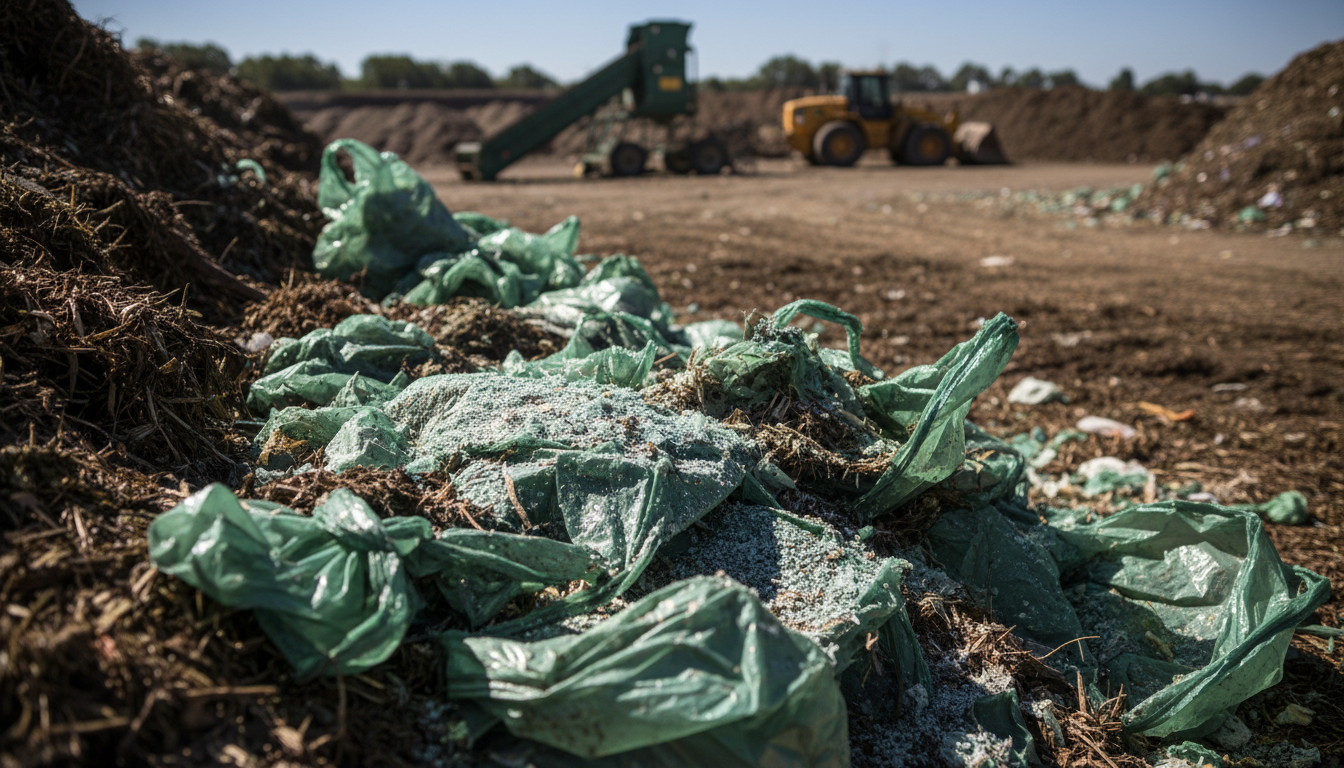
Walk down the grocery store aisle and you'll see them everywhere: bags labeled "compostable," "biodegradable," or "eco-friendly." They look like plastic, feel like plastic, but promise to break down harmlessly in compost. Sounds perfect for collecting kitchen scraps, right?
Not quite. The truth about bioplastic compost bags is far more complicated than the marketing suggests. These products, despite their green claims, are causing serious problems in composting facilities across the country, including right here in San Diego. Understanding why can help you make better choices for your kitchen and the environment.
What Are Bioplastic Bags, Really?
Bioplastic bags are made from plant-based materials like corn starch, potato starch, or sugarcane instead of petroleum. The most common type is PLA (polylactic acid), derived from fermented plant sugars. Because they come from renewable resources rather than fossil fuels, manufacturers market them as environmentally superior alternatives to traditional plastic.
Many of these bags carry certifications like "ASTM D6400" or "BPI Certified Compostable," indicating they meet specific standards for industrial composability. This certification means the bag will break down under specific conditions: temperatures of 140°F or higher, controlled moisture levels, and a timeframe of 180 days.
That last part is crucial: 180 days. That's six months. And here's the problem—most commercial composting facilities, including San Diego's EDCO facility, complete their composting process in just 8-12 weeks. The math doesn't work out.
The Reality of Commercial Composting Timelines
Municipal composting facilities operate on tight schedules. They receive organic waste, process it quickly, and need to turn it into finished compost that can be sold or distributed. The entire cycle typically takes two to three months from collection to finished product.
During this time, the facility shreds the incoming material, manages moisture and temperature through regular turning, and allows microorganisms to break down the organic matter. Food scraps, yard waste, and paper products decompose readily in this timeframe. But bioplastic bags? They're just getting started.
When these bags don't break down in time, facility operators face a difficult choice. They can either contaminate their finished compost with plastic-like remnants, or they must manually remove the bags before processing. Both options create problems and add costs.
San Diego's organic waste program specifically recommends against using bioplastic bags for exactly this reason. The bags that seem eco-friendly in the store become problematic waste once they enter the actual composting system.
The Microplastics Problem Nobody Talks About
Even when bioplastic bags do eventually break down, they don't disappear completely. Research is increasingly showing that these materials fragment into microplastics—tiny particles less than 5mm in size that persist in the environment.
A 2020 study published in the journal Frontiers in Microbiology found that PLA products, including compostable bags, break down into microplastic particles in soil environments. These particles don't biodegrade in any meaningful timeframe; they simply become smaller pieces of plastic that accumulate in soil and water.
This is particularly concerning for compost that's sold to farms and gardens. If that compost contains microplastics from incompletely degraded bioplastic bags, those particles end up in agricultural soil, potentially entering the food chain. The very thing you're trying to avoid by composting—plastic pollution—still occurs, just in a less visible form.
Traditional petroleum-based plastics are obviously worse, creating microplastics that never biodegrade at all. But the promise of bioplastics—that they would solve this problem—isn't being fulfilled in real-world composting conditions.
Why Facilities Are Rejecting "Compostable" Bags
Composting facilities across the country are increasingly vocal about the problems caused by bioplastic bags. Many facilities now explicitly ban them, even when they're certified compostable.
The issues are practical and economic. When bags don't break down, workers must manually sort through compost to remove plastic-like material. This is labor-intensive, time-consuming, and expensive. Some facilities have installed screening equipment to catch bag remnants, but this adds costs and reduces efficiency.
There's also a quality control problem. Finished compost contaminated with plastic pieces—even if they're technically "bioplastic"—is harder to sell. Farmers and gardeners don't want visible plastic in their soil amendments, regardless of whether it came from corn or petroleum.
Perhaps most frustrating for facilities is the confusion factor. When people see "compostable" on a bag, they assume it belongs in the green bin. This extends to other products too—compostable utensils, plates, and containers that face the same breakdown timeline problems. The result is contamination that facilities must manage, reducing the efficiency and effectiveness of organic waste programs.
The Certification Confusion
Those certification logos on bioplastic bags create a false sense of security. "BPI Certified Compostable" sounds official and trustworthy, and it is—for industrial composting facilities that can meet specific conditions. But it doesn't mean the product will actually compost in your local facility's timeframe.
The ASTM D6400 standard, which most certifications reference, requires products to disintegrate (break into pieces smaller than 2mm) within 12 weeks and biodegrade (convert to CO2, water, and biomass) within 180 days. Notice those are two different timeframes. A bag can meet the disintegration requirement and still leave behind microplastic particles that take much longer to biodegrade.
Making matters worse, these standards were developed under ideal laboratory conditions that don't reflect real-world composting operations. Test facilities can carefully control temperature, moisture, and oxygen levels. Municipal facilities dealing with tons of mixed organic waste cannot.
The gap between certification standards and operational reality means that certified compostable bags often fail to perform as advertised when they enter actual composting systems. It's not that the certifications are lies—it's that the conditions they test for don't match the conditions that exist in practice.
What San Diego Composters Should Know
San Diego's Environmental Services Department, which oversees the city's organic waste program, has clear guidance on this issue. They recommend using paper bags for kitchen food scrap collection, not bioplastic bags.
This recommendation reflects the reality of how San Diego's organic waste is processed. EDCO's Escondido facility, which handles much of the region's organic waste, operates on a timeline that makes bioplastic bags problematic. The facility's composting process is too fast for these bags to fully break down.
For San Diego residents participating in the mandatory organic waste recycling program under SB 1383, this matters. Using bioplastic bags might seem like following the rules, but it actually creates problems in the system designed to process your waste.
The city's guidance is straightforward: use paper bags, paper liners, or no liner at all. These options work with, rather than against, the composting process.
Home Composting Isn't the Answer Either
Some people assume that if bioplastic bags don't work in commercial facilities, they'll just compost them at home. Unfortunately, home compost piles face even bigger challenges with these materials.
Backyard compost rarely reaches the sustained high temperatures that bioplastics need to break down. While a well-managed pile might hit 140°F during active decomposition, it won't maintain that temperature for weeks or months. Most home composters report that bioplastic bags remain intact indefinitely in their piles.
This creates a frustrating situation where certified "compostable" bags won't actually compost in either municipal or home systems. They exist in a sort of limbo—too problematic for facilities, too slow for home piles, but marketed as an eco-friendly solution to both.
The Better Alternative: Paper
If bioplastic bags are problematic, what should you use instead? The answer is simpler than you might think: paper.
Paper bags made from natural fibers break down quickly and completely in both municipal and home composting systems. They typically decompose within 2-4 weeks, well within the timeline of commercial composting operations. There are no microplastics, no certification confusion, and no processing headaches for facilities.
High-quality paper compost bags offer several advantages:
- Fast breakdown: Decomposes in weeks, not months
- True biodegradability: Converts to organic matter without leaving plastic residues
- Moisture management: Paper absorbs excess liquid while allowing airflow, reducing odors
- Facility acceptance: Welcomed by composting operations rather than problematic
- No special conditions needed: Works in both municipal and home composting
The key is finding paper bags specifically designed for wet organic waste. Regular paper bags can tear when exposed to moisture from food scraps. Quality compost bags use papers treated with natural starches (like potato starch) that provide water resistance without plastic coatings.
These bags maintain their integrity while holding wet food scraps, but unlike bioplastics, they break down rapidly once in the composting environment. The water resistance is temporary and designed to last just long enough to collect and transport waste, not to persist through the composting process.
What About Other "Compostable" Products?
The same issues affecting bioplastic bags apply to other compostable products made from similar materials. Compostable utensils, plates, cups, and takeout containers often face identical problems in composting facilities.
PLA cups from coffee shops, compostable cutlery from restaurants, and plant-based food containers all carry the same certifications and face the same breakdown timeline challenges. They're marketed as sustainable alternatives to conventional plastic, but they create similar problems in composting systems.
For San Diego residents, the practical guidance is the same: these items shouldn't go in your green bin even if they're labeled compostable. The local composting infrastructure isn't designed to handle them effectively.
This doesn't mean these products are useless—in settings with appropriate composting infrastructure, they can work. Some specialized facilities with longer processing times and higher sustained temperatures can handle bioplastics successfully. But those facilities are rare, and they're not where your green bin contents are going.
The Bigger Picture: Marketing vs. Reality
The bioplastics issue reveals a broader problem in how environmental products are marketed. Companies can truthfully claim their products are plant-based, certified compostable, and better than conventional plastic—all while creating real-world problems in waste management systems.
This isn't necessarily intentional deception. The bioplastics industry genuinely sought to create better alternatives to petroleum-based plastics. The problem is that product development outpaced infrastructure development. We have bags designed for ideal composting conditions that don't exist in most facilities.
The result is a disconnect between consumer expectations and system capabilities. You think you're making an eco-friendly choice by buying compostable bags. The composting facility receiving them sees contamination that must be managed. Both perspectives are valid, but they're incompatible in practice.
This matters for climate action too. When organic waste ends up in landfills because composting systems can't handle bioplastic contamination, it produces methane—a greenhouse gas far more potent than carbon dioxide. The very programs designed to reduce emissions face operational challenges because of products marketed as environmental solutions.
What Needs to Change
Fixing this problem requires action at multiple levels. Product manufacturers need to develop bioplastics that actually work within the timeframes of existing composting infrastructure, or stop marketing current products as universally compostable.
Certification standards should reflect real-world composting operations, not idealized laboratory conditions. A product that takes six months to break down shouldn't be certified for systems that operate on 8-12 week cycles.
Composting facilities need better technology for screening out problem materials, though this adds costs that ultimately get passed to ratepayers or reduce facility profitability.
Most importantly, consumers need clear, honest information about what actually works in their local systems. "Compostable" shouldn't mean "compostable under perfect conditions we can't provide." It should mean "will actually break down in the system where you're sending it."
Making Better Choices Today
While we wait for systemic changes, individual composters can make better choices with available information. For San Diego residents managing kitchen organic waste, the path forward is clear.
Choose paper over bioplastic for food scrap collection. Look for bags specifically designed for organic waste, with natural water resistance and built-in ventilation. These work with your local composting infrastructure instead of against it.
Educate others about the bioplastic problem. Many people genuinely don't know that their "compostable" bags are causing issues. Sharing this information helps build demand for real solutions.
Support policies and companies that prioritize practical functionality over greenwashing. Products should be evaluated on how they perform in actual use, not just how they test in laboratories.
The goal of composting is to close the loop on organic materials, returning nutrients to soil instead of sending them to landfills. Every part of the system should support that goal, including the bags we use to collect food scraps. When products interfere with composting rather than enabling it, they're not solutions—they're obstacles dressed in green marketing.
The Bottom Line
Bioplastic compost bags promised an eco-friendly solution to kitchen waste collection. In practice, they've created a new set of problems without solving the original ones. They don't break down fast enough for municipal composting timelines, they leave behind microplastic particles, and they confuse consumers while burdening composting facilities.
The alternative—high-quality paper bags designed for organic waste—works better in every measurable way. They break down quickly and completely, they're accepted by composting facilities, they manage moisture effectively, and they don't leave behind persistent pollutants.
As San Diego and other cities work to maximize organic waste diversion under new regulations, getting the basics right matters. That means using materials that actually work in the systems we have, not materials that work only in systems we wish we had.
Choose paper. Support your local composting infrastructure. And question any product that promises sustainability without proving it can deliver in real-world conditions. Your green bin—and the facilities that process its contents—will thank you.
EcoToss bags are made from 100% paper with natural potato starch coating—no bioplastics, no microplastics. They break down completely in 2-4 weeks at composting facilities, working with San Diego's infrastructure instead of against it. Simple, effective organic waste collection that actually composts.